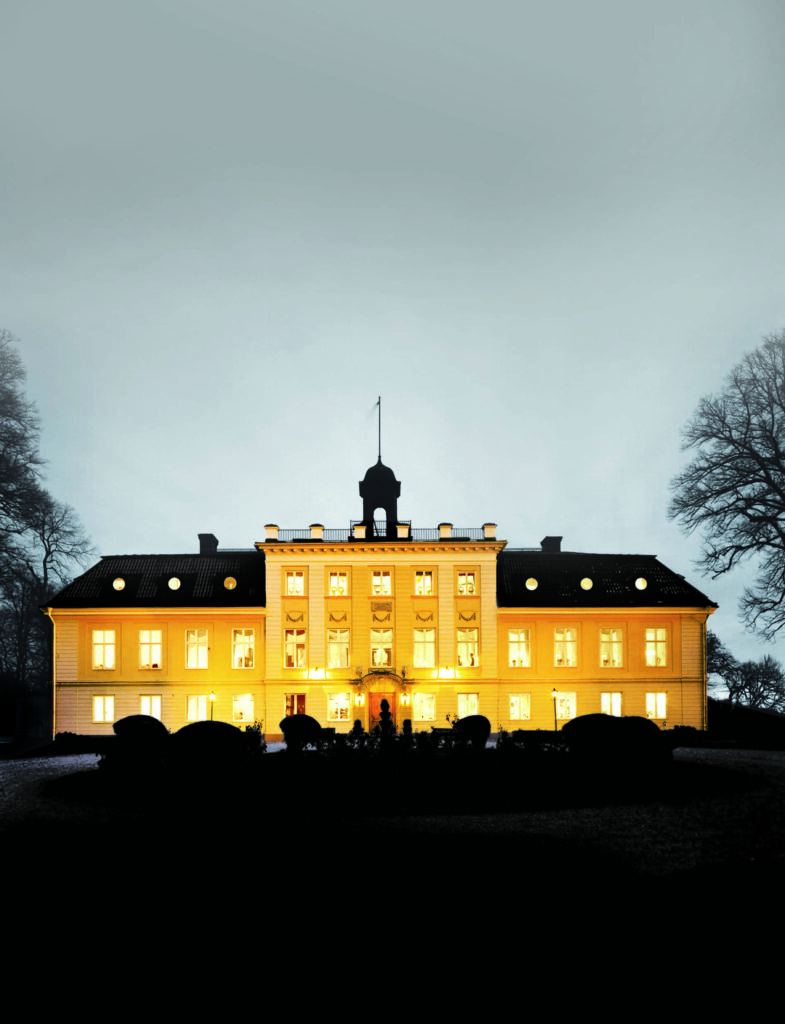
An ancient castle environment
The environment around Södertuna Slott outside Gnesta is filled with remains from different periods in Swedish history. Remains dating back to the Iron Age have been found, but people probably lived here even earlier. The natural environment, with many lakes and sheltered bays and islets, made it a suitable place to live.
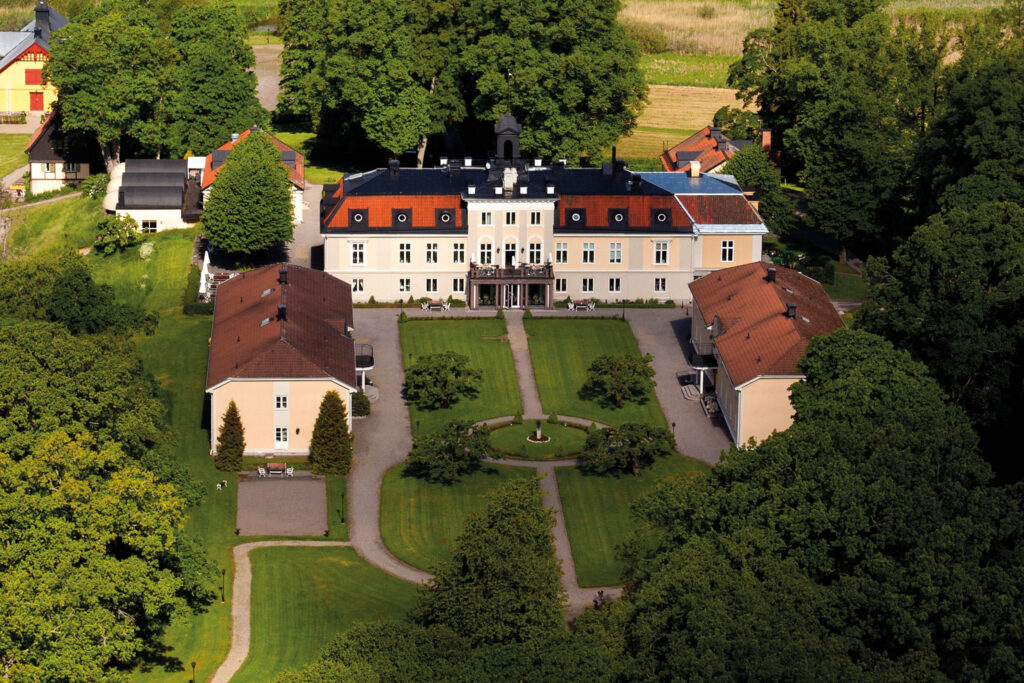
From farm to castle
Throughout the years and history, many intrigues have unfolded around Södertuna Slott and the owners have been many. Originally, in the 14th century, Södertuna Slott was a manor, which in the 18th century began to be transformed into Södertuna Castle. With some adjustments over the years, such as renovations and modernizations, Södertuna Slott has become what it is today.
Medieval times
In the 14th century, the Swedish kingdom began to take shape and here on the shores of Lake Frösjön a seat was founded, which at that time was called Wad, after the ford that existed in the area. The first known owner was the knight Karl Niklisson Färla, whom we perhaps remember best for his violent death.
In 1381, Färla was slain by the richest man of the time, the king of Sweden Bo Jonsson Grip, right in front of the high altar in the Franciscan Church (now Riddarholm Church) in Stockholm. Grip blamed the murdered man, received no punishment, and was then allowed to take over all of Färla's farms. In the 15th century, however, the family got Wad back again.
The medieval farm had thick walls and was well protected on an islet. Like many other great men's farms during this rather violent time, it served as both a defense facility and a farm. But, as the Battle of Färla shows, even thick walls didn't help against all dangers.
By the 14th century, Christianity had gained a firm foothold in Sweden and legend has it that there was a monastery here on the site. Who knows, perhaps the thick cellar walls of the castle hide remnants of a more pious history than the intrigues of the great men. In the basement of the castle there were underground secret passages from the Middle Ages. You can bring history to life yourself by dressing as monks and having supper in what is now our wine cellar.
1700-1900
During this time, the old medieval farm was transformed into the 18th century castle of Södertuna. You can experience the 18th century atmosphere for yourself by organizing a real castle ball.
Today's main building is largely the castle created by the Lovisin family, with some adjustments over the years, including during the 1820s, and then during Ebba von Hallwyl's era beginning in 1891.
Ebba von Hallwyl received Södertuna Slott as a gift from her generous grandmother Johanna Kempe. At the time, Ebba was married to Lieutenant Willhelm von Eckermann. The couple hired the architect Isac Gustav Clason who modernized both the interior and exterior. Pilasters and festoons were added, as well as the Baroque lantern on the roof. The magnificent rococo doors, with Ebba's and Willhelm's family coat of arms, were also added.
The large farms functioned as businesses, and since Wilhelm often worked for Queen Victoria and spent much of his time abroad, it was Ebba who had the greatest responsibility for the business. The castle's workers and tenants had their homes renovated and stables and barns were built for the animals. Take a closer look at the stables with a themed party, where you can enjoy a delicious barbecue buffet and sit down in the stalls by red checkered tablecloths.
Södertuna Slott today
A subdivision took place in 1985 when the von Eckermann family sold the castle and associated park. The property has since been owned by Södertuna Konferensslott AB. The ownership constellation has changed over the years.
The current owners, since 2007, are the Åström family. The Åström family also owns Dufweholm Manor in Katrineholm and Gripsholm Inn in Mariefred, which together with Södertuna Slott are part of the Swedish Cultural Heritage.